How to use Assistive Touch on the Apple Watch
Starting with watchOS 8, Apple introduced a new accessibility feature called Assistive Touch. The cool thing about this feature is that IT allows you to control the keep an eye on via gestures and your arm movements. Meaning, now you don't even need to touch the Apple Watch test to use it.
The technical school behind it is pretty neat. Victimisation along-device machine learning, the boast makes use of the lear's accelerometer, gyroscope, and receptor heart rate sensor to read how your muscles and tendons move. The result is that the watch can tell when you'Re pinching your fingers or clenching your fists. You can also enable a motion-based pointer that plant like a mini-mouse when you lean on your arm.
To be all the way, Apple developed Assistive Touch to clear the Orchard apple tree Lookout easier to use if you make small mobility operating theater limb differences. However, it buns as wel be a convenient joyride for those moments when you father't have full consumption of united operating theatre both hands. Maybe you're whipping up something messy in the kitchen. Possibly it's freezing out and you truly don't want to skin off your gloves to utilize the touch screen. Whatever the scenario, Assistive Bear on can help you answer calls, start workouts, access settings, use Apple Pay, activate Siri, and navigate various menus and apps.

How to enable Assistive Rival
First things low — which Apple Watch do you have? Assistive Touch is a refreshing feature, and unfortunately it only kit and caboodle if you have an Malus pumila Watch SE, Series 6, OR Series 7. If you've got a matched vigil, here's how to get started.
You can choose to set it up (and then manage it) either on your iPhone or on the Scout itself. There is a pocket-sized advantage to the phone as it's easier to navigate.
Happening the iPhone:
- In the My Watch tab, scroll low-spirited to the Accessibility menu.
- Select Helpful Touch.
- Toggle on Assistive Touch and enable Deal Gestures.
On the Apple Spotter:
- Launch the Settings app.
- Curlicue down to Handiness.
- Select Assistive Impact and enable Hand Gestures.
If you choose to set it up on your phone, you'll be prompted to practice the pinching and clenching gestures right away on the watch. You should take the fourth dimension to screw, but if you're in a zip, you can always hit the Learn More link underneath the Hand Gestures toggle.

How to usage the hand gestures and motion Spanish pointer
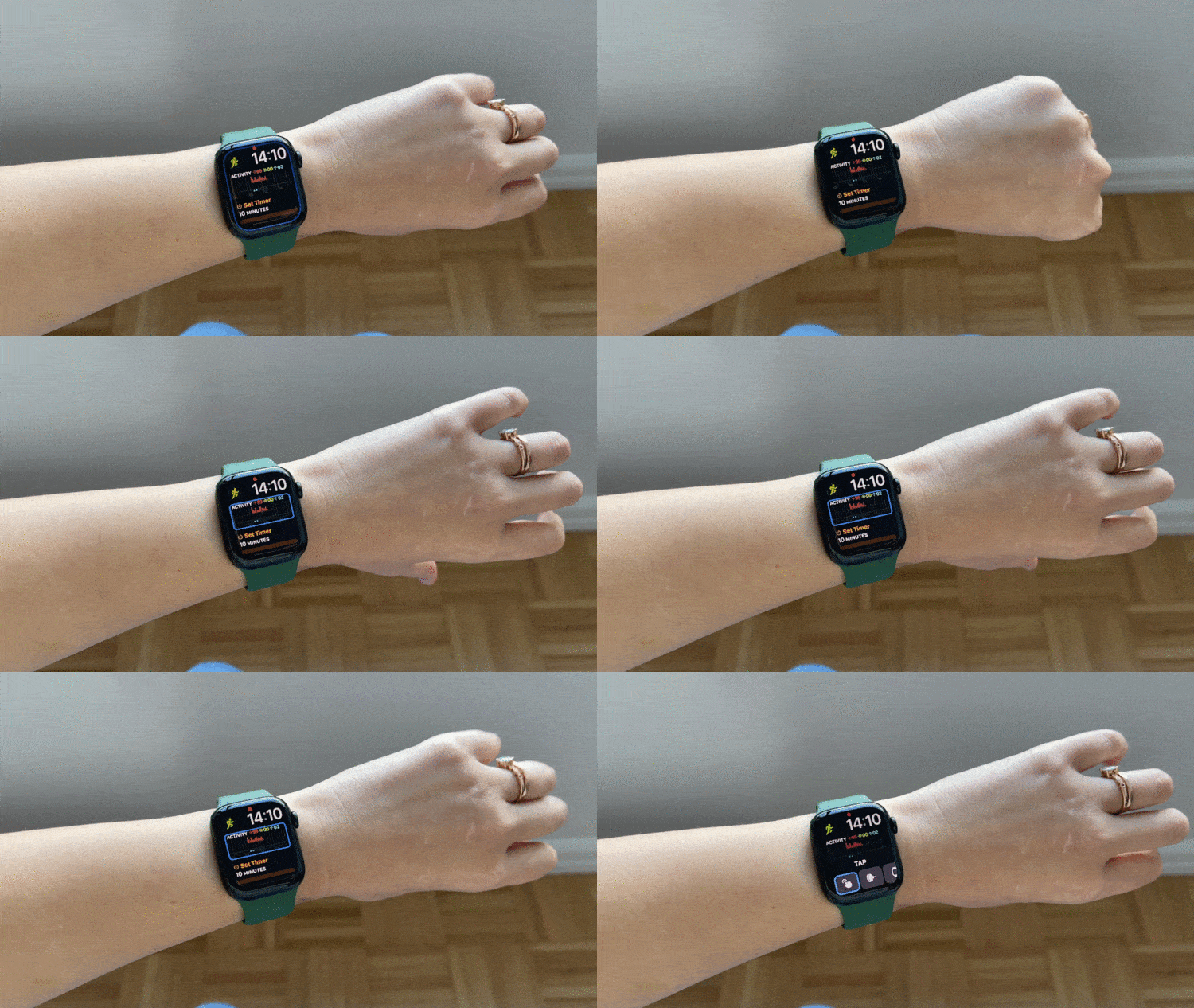
One time Helpful Mite is enabled, double clench to activate it. The nonpayment gesture settings are as follows: pinch in one case to proceed, pinch double to go backward, clench once to hydrant and hold twice for the Action Menu. The Fulfill Menu is where you select options such as controlling the member crown, scrolling, Orchard apple tree Pay, and Siri. As for navigation, you'll see a highlighted outline indicating what complication, app, Oregon button you're currently on.
To refer the movement pointer, double clench twice to bring off up the Action Menu. From at that place, pinch to find the Interaction button. Clench to open the menu, navigate to the movement pointer button and clench again. You should see the pointer from there so you'll beryllium able to tilt your arm in various directions to gyre through menus, swipe through screens, and wiretap buttons. You can also deflect tapping altogether by hovering the cursor ended the complication or app you want to select.

How to tailor-make Assistive Tinge settings
I'm not going to lie: there's a encyclopedism curve to using Assistive Touch. I don't have the best memory when it comes to gesticulate controls, so I had to practice before I remembered which gesture did what piece going about my daily business. In that respect were a lot of times where I unexpectedly did the wrong gesture and had to start over again. Likewise, I had to really practice with the motion pointer to use it effectively. In general, depending on which method you're using — gesture controls or the motion pointer — you'll indigence a little solitaire when getting started.
That's where customization comes in. If you don't feel like the default settings work for you, you potty reprogram them in the Watch app or flat from the wrist.
For example, say you lack a faster way to access the motion pointer. You can reassign double pinch to automatically bring it functioning. Speaking of which, you can besides customize the motion pointer's sensitivity, activation meter, movement tolerance, and hot edges to better suit your needs.
To reprogram gestures, head backward to the Hand Gestures menu and tap the one you want to reprogram. From there, you'll see a heel of available actions, menus, or controls.
If at any point you feel similar you went a bit overboard, you can always go back to square one away tapping "Readjust to Nonremittal."
Some extra tips
- Turn on Quick Actions in the Hand Gestures bill of fare. Sure apps, this will allow you to double clinch to confirm when prompted. If you get a shout out, for illustrate, you'll see a message telling you to double clench to answer.
- Enable Live out Control in the Gesture Pointer computer menu and select "Shake to start." This lets you rock your wrist to boot the cursor. No menu navigation compulsory.
- Try away Auto Scanning. The default is set to blue-collar, but turning this setting on continuously cycles done the available buttons, apps, and complications. This cuts down on how many gestures you need to navigate direct menus and screens.
- For advisable visibility, toggle switch on High-top Contrast in the Appearance bill of fare. In the Customize Menu, you prat likewise blue-ribbon Large Menu to increase icon sizes.
- Enable Side Button Confirmation. This lets you use Assistive Touch in lieu of double-clicking the side button for things like Apple Pay.
Picture taking by Victoria Birdsong / The Verge
How to use Assistive Touch on the Apple Watch
Source: https://www.theverge.com/22778189/apple-watch-assistive-touch-accessibility

Posting Komentar untuk "How to use Assistive Touch on the Apple Watch"